
























Cheyenne, Wyoming
From Tent City to Today
In its earliest days, Cheyenne was nicknamed the “Magic City of the Plains” because of how quickly it transformed from a humble tent city into a bustling town.
General Grenville M. Dodge, head of construction for the Union Pacific Railroad, founded Cheyenne and began planning the town on July 4, 1867. By the time railroad tracks were completed that November, the population had grown to more than 4,000 residents, earning Cheyenne its “Magic City of the Plains” nickname.
As a major railhead for the cattle industry, Cheyenne became a second home for English and European cattle barons. By 1885, Cheyenne was considered the “richest city in the world per capita.”
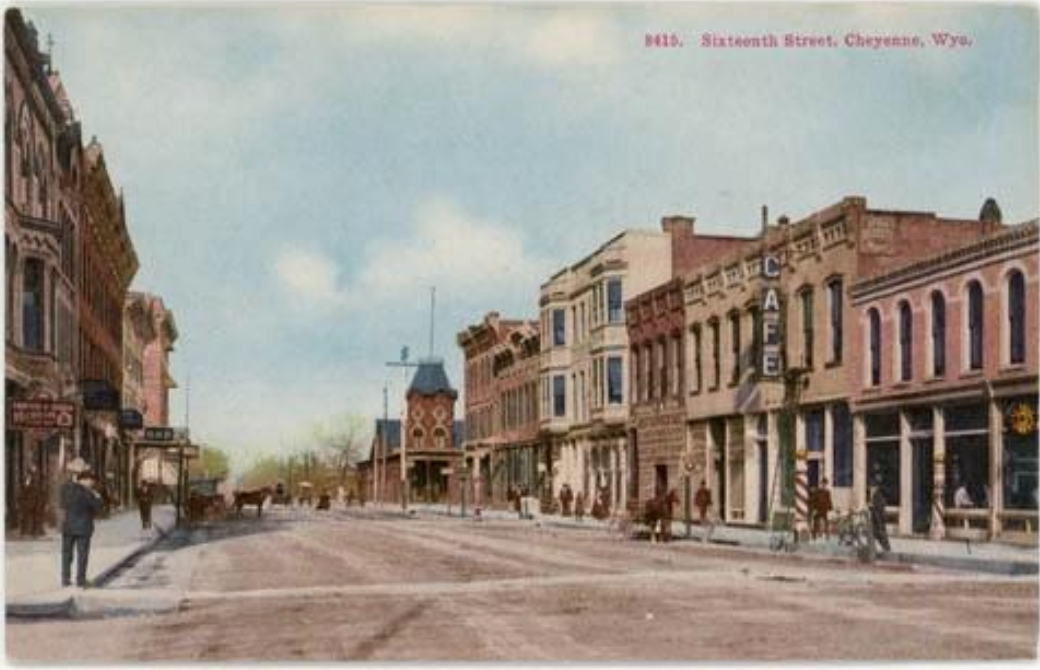
A painting of Downtown Cheyenne in 1890.
Built between 1872 and the 1920s, Downtown Cheyenne represents Cheyenne’s first half-century of growth, with “commercial Victorian” design styles and influences still visible in the historic buildings that remain today. These structures—former homes to saloons, breweries, boarding houses, and eating establishments—all played an important role in the growth and development of both the downtown area and the city at large.
In 1978, Downtown Cheyenne officially earned its place on the National Register of Historic Places (NRHP).
Today, the Cheyenne Downtown Development Authority (DDA) continues to spark economic development through urban revitalization in Cheyenne’s Downtown District, ensuring its vibrancy and appeal for years to come.
Historic Finds and Features
While many of Cheyenne’s earliest structures were made entirely of wood and have since been lost to fires or damage over time, visitors can still experience the city’s historic character while exploring Downtown Cheyenne today.
Several historic buildings available to admire and explore include:
Atlas Theatre
A three-story treasure, built in 1887 and still being used for live theater performances today.
Cheyenne Depot
An anchor of the Downtown District, this National Historic Landmark is also home to the Cheyenne Depot Museum.
Dinneen Building
Built as an automobile dealership in 1927, the building expanded in 2011 with a two-story, 16,000 sq.ft. addition.
Historic Governor's Mansion
Stroll back in Wyoming’s history—from 1905 to 1976, to be exact—and see furnishings, decor, and more from the days former Wyoming governors called 300 E. 21st St. home.
Historic Plains Hotel
Wyoming’s very first luxury hotel, built in 1911 with 131 guest rooms and suites.
Hynds Building
Built by (and named after) Cheyenne entrepreneur and philanthropist Harry P. Hynds in 1919, this building’s design—modeled after structures in New York City—was considered incredibly advanced for its time.
Majestic Building
Home to the oldest brass elevator in the west, this historic, five-story building is home to a variety of businesses and office spaces.
Nagle Warren Mansion
Constructed in 1888, this one-of-a-kind Victorian mansion currently operates as a bed and breakfast and hosts “high tea” events year-round.
Tivoli Building
The Tivoli, built in 1883, is recognized as one of the best examples of Victorian architecture in the Rocky Mountain area.